

From complex LNG developments to globally integrated infrastructure systems, the scope of some of the world’s largest megaprojects reflects the scale of modern ambition. These are investments measured in billions and delivered over many years with the expectation that they perform reliably for generations to come. The very scale that makes them transformative also makes them fragile. Small misjudgments made early can compound into hugely consequential setbacks, as seen in Australia’s Gorgon LNG development, where early underestimation of technical complexity and risk exposure contributed to years of delays and tens of billions of dollars in cost overruns.
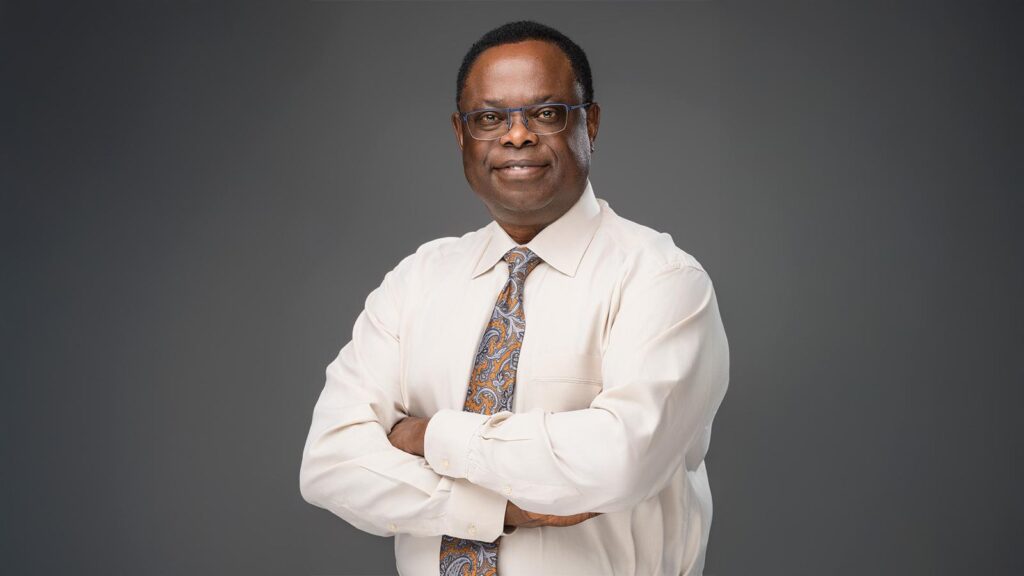
“Most project failures are not technical. They are decision failures made long before ground is broken,” says Akin Oni, CEO at Eftex Group. “We invest enormous energy in execution, yet we underinvest in decision quality.”
It is the premise of his upcoming book, Mega Project Development and Decision Making: Strategies for Successful Projects and Investments, out March 9th. Oni, who has led and advised energy, refining, LNG, and mining developments globally, argues that the underlying issue is a lack of deliberate challenge and pause at critical early decision points. Execution excellence or intensity cannot compensate for weak decision architecture.
For more than three decades, his work has stretched from early concepts and investment decisions through operational handover, spanning oil and natural gas developments, LNG facilities, refining expansions, and mining and infrastructure programs. The pattern he describes is familiar across sectors: once capital is committed and momentum builds, changing course becomes politically and financially expensive, even when new information signals danger.
Leadership That Slows Down the Right Decisions
In capital-intensive industries, “leadership” can become shorthand for decisiveness. Oni challenges that reflex. Strategic leadership, he says, “is less about having the answers and more about creating the conditions for better answers to surface.” Technical brilliance and financial rigor matter, but they aren’t sufficient when the most important questions are probabilistic. What separates strong megaproject leadership is judgment under uncertainty, and the willingness to make space for dissent before a decision locks in. “The best leaders I’ve worked with are not the loudest voices in the room,” he says. “They are the ones who know when to pause, when to probe assumptions, and when to protect the organization from its own optimism.”
That approach reframes “speed” as a managed variable. Slowing down at a gate review can be the fastest path to value creation if it prevents years of downstream rework, claims, and compromised performance. As the saying goes, slow is smooth and smooth is fast.
Clarity Without Certainty: Frameworks That Hold in Unstable Conditions
Large-scale investments are shaped by shifting political priorities and market inputs that move faster, and with greater volatility, than traditional governance cycles. The answer isn’t to chase certainty, which is unattainable at the scale and horizon megaprojects operate, it’s to focus on structure. Structure, in this sense, is scenario thinking that forces trade-offs into the open. It is explicit thresholds and triggers that define when a team should hold, pivot, or stop, and it’s decision rights that prevent ambiguity from becoming a hiding place.
“When teams agree on principles, thresholds and triggers ahead of time, they stay aligned even as conditions shift,” he says. Without that alignment, uncertainty breeds confusion, multiplying risk.
Three Execution Disciplines That Protect Value
Oni describes three disciplines that help determine whether megaproject strategy will survive contact with reality. First is strong front-end loading, the hard work of defining scope, value drivers, execution strategy, and risk posture before the project commits to full delivery. “The quality of execution is largely determined before execution begins,” he says, noting that teams that rush the phase “pay for it many times over later.” That is also why he emphasizes “opportunity framing very early in every project life cycle,” ensuring the investment case is explicit about what success means, what it costs, and what must be true for value to materialize.
Second is decision clarity. Teams need to know who decides what, when, and based on which criteria. “Ambiguity here is one of the fastest ways to lose momentum and accountability,” Oni says. Third is active governance, meaning “governance that stays engaged, not ceremonial,” Oni says. Oversight bodies that approve and disappear miss the opportunity to challenge assumptions as new data arrives. Alive governance calibrates, supports, and tests whether delivery remains anchored to the original intent.
Technology’s Promise, and Its Most Dangerous Trap
As digital tools and AI reshape forecasting, analytics, and controls, Oni is optimistic about what machines can add while cautious about what leaders may abdicate. “The greatest opportunity is better foresight,” he says. AI can surface patterns, stress test assumptions, and highlight emerging risks earlier than humans alone. However, the same tools can harden bad thinking if teams treat outputs as truth. “The greater risk is false confidence,” Oni says. “Algorithms do not remove bias; they can actually amplify it.” The next generation of project leaders will need ethical judgment, curiosity, and the humility to challenge even sophisticated models. “Technology informs decision,” he says. “It never replaces responsibility. And it never will.”
Choose Wisely Early and Well
Megaprojects shape supply chains, employment, public trust, and long-term competitiveness. Organizations must treat the earliest decision points with the same seriousness they later bring to execution. “Mega projects shape economies, communities and generations,” he says. “Yet too often we treat the most consequential decisions as procedural checkpoints rather than moments that deserve deep reflection and courage.”
For leaders who control capital and governance, it’s crucial to slow decisions down where the stakes are highest and to impose structure to prevent uncertainty. “The future,” Oni says, “will reward those who choose wisely early and well.”
To pre order his book on Mega Project Development and Decision Making: Strategies for Successful Projects and Investments, visit https://www.akinoni.com/megaproject-development-decision-making/.
Follow Akin Oni on LinkedIn or visit his website for more insights.