

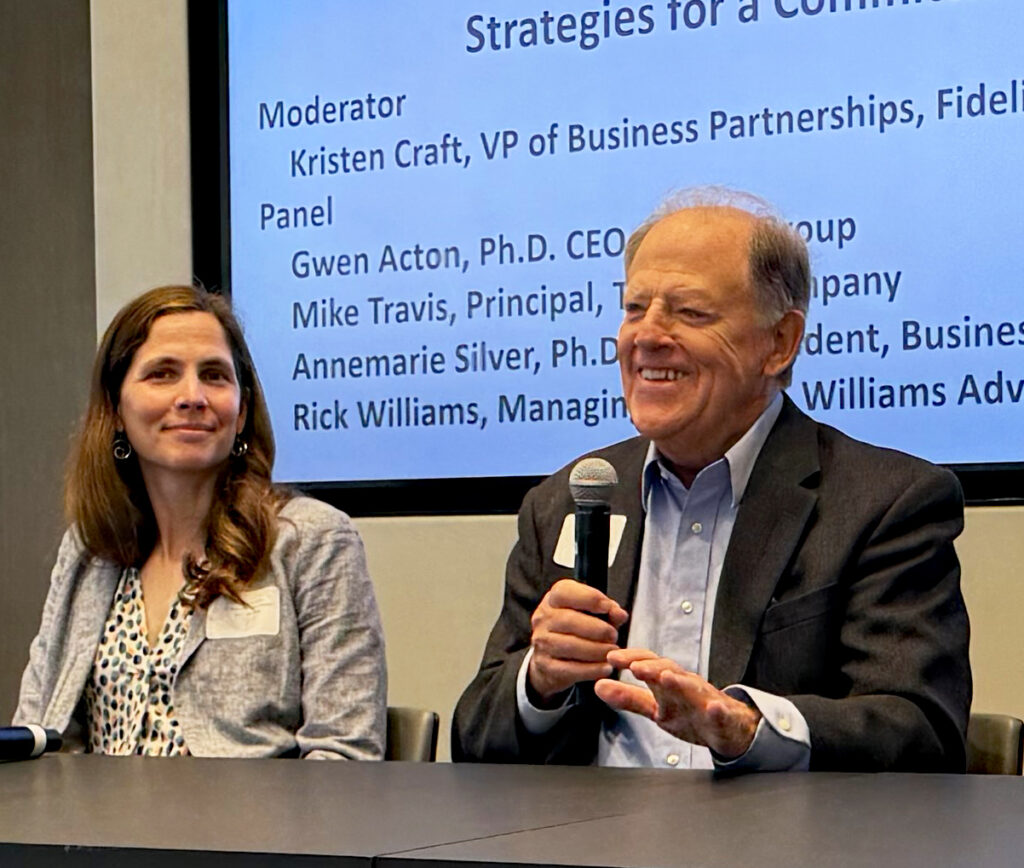
Leadership is often framed around what leaders ask others to do. Rick Williams argues that the more important question comes first: What has the leader given? “Give before you ask,” Williams says. “Giving is where leadership begins.” For Williams, a board director, former chief executive officer, management consultant and keynote speaker, leadership starts with building the trust that makes an eventual ask possible. That means recognizing the person on the other side of the conversation, understanding what matters to them, and offering something of value before expecting anything in return.
The principle is straightforward, but its implications reach into executive decision-making, customer relationships, and board effectiveness. For leaders facing difficult decisions, it provides a practical foundation for deciding not only what to ask, but how to bring people with them.
Trust Starts With What Leaders Give
Williams’s concept of leadership reciprocity begins with a shift in perspective. Leaders naturally think about what they need from a customer, employee, investor, or potential partner. Effective leadership requires starting somewhere else. “Before I think about my need, I should be thinking about my customer’s need, my teammate’s need, and my investor’s need,” Williams says.
The approach applies whether a leader is trying to win a customer, align a leadership team or build a new partnership. The result is relationship capital, built before it is needed. Rather than treating trust as something that emerges after an agreement is reached, Williams sees it as the prerequisite for meaningful collaboration.
Give a Vision Before Asking for Commitment
The same principle applies when leaders are asking people to move in a new direction. A strategy may be logical, but logic alone does not create commitment. “Before asking what you want and what you need, give a vision of success,” Williams says. That vision gives employees, customers and other stakeholders a reason to believe that the proposed direction will create something worthwhile. It also gives difficult decisions a larger context. Instead of asking people to accept uncertainty simply because a leader has made a choice, leaders can connect the choice to a compelling picture of what success looks like.
For Williams, this is central to creating the future through better decisions. Decisive leadership is not simply about making choices quickly. It is about managing the decision-making process, considering different ideas, and giving people enough clarity to understand where the decision is intended to lead.
Turn the Board Into a Value Accelerator
The give-before-asking philosophy also extends beyond the executive team to the boardroom. Williams has served as a board chairman and director of technology-focused, business-to-business companies, bringing experience across medical technology, finance, software, and other sectors.
His work around board effectiveness reflects the same underlying principle: a board should contribute meaningful value rather than simply provide oversight. A productive board can challenge assumptions, broaden the range of options and help leaders assess execution risks. That becomes especially important when an organization is navigating high-stakes choices, where the quality of the decision framework can matter as much as the decision itself.
Williams’s book Create the Future focuses on precisely this challenge, offering a leadership guidebook for making difficult decisions across companies, nonprofits, and government agencies. His approach emphasizes clarity around the issue, realistic options, and the risks associated with execution.
Leadership Lessons From a Sailboat
Some of Williams’s most memorable leadership lessons come from an unlikely setting: the deck of his J/130 sailboat, CHARIAD. He races with a team of eight to ten people, where preparation, strategy, and execution all have to work together as conditions change. Before a race, the crew has to be right, the boat prepared, and the technology working. Once the race begins, however, no plan remains untouched. Wind, waves, and competitors force the team to adjust.
The analogy captures a broader lesson about leadership. Preparation matters, but so does the ability to make difficult decisions when circumstances change. Leaders need people they trust, a shared understanding of the objective, and a decision framework that allows them to respond without losing sight of the destination.
The Foundation Beneath Every Ask
For Williams, giving is the foundation of trusted leadership. “Give respect and build trust. Give a vision of success and build commitment. Give your offer of value that is relevant, important to your staff, your team, your community, or to your customer,” he says.
That sequence changes the nature of leadership. The leader is no longer beginning with an agenda and looking for others to support it. The leader begins by creating value, establishing trust and demonstrating an understanding of what others need. Only then does the ask have a foundation.