

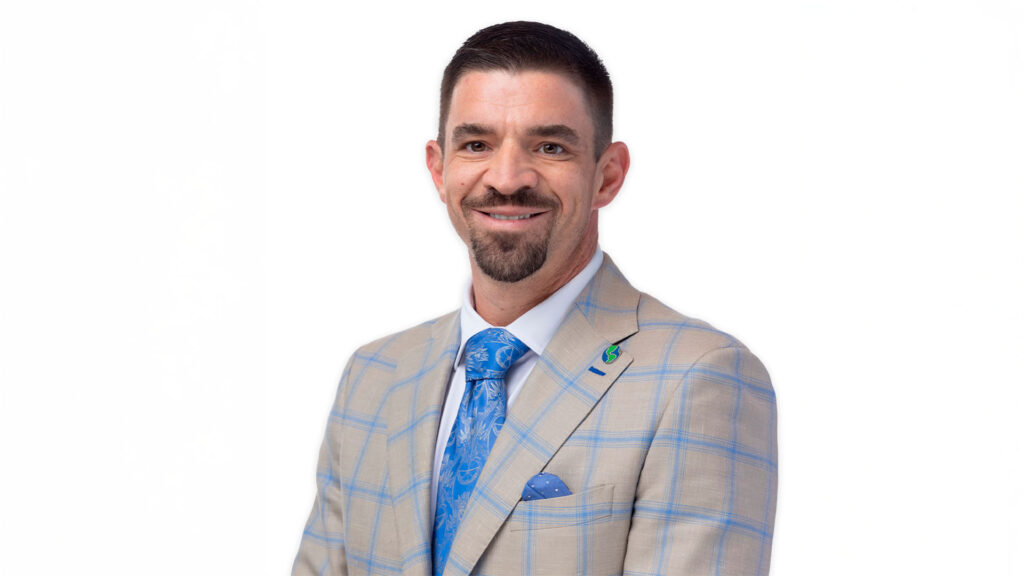
For Nick William Moore, economic impact starts with people. As Chief Executive (CEO) of The Moore Organization, Moore has built his career around a simple leadership philosophy that businesses grow when leaders focus on developing people first. After leaving upstate New York to spend time in Boston, Moore saw firsthand how thriving local economies were often built through relationships, mentorship, and businesses reinvesting into their communities. Returning home changed the way he viewed success. “It’s easy to leave where you grew up and forget where you came from,” Moore says. “When you really appreciate the roots of where you lived and you can bring opportunities back, you’re creating more economic olive branches for the people that raised you.” For Moore, long-term economic impact is best measured through the opportunities leaders create for others.
Building Leaders Instead of Building Numbers
Moore started in the insurance industry from the ground up, learning the business through consistency, discipline, and relationship-building. Over time, he realized sustainable growth was less about individual production and more about talent multiplication.
Moving his office to downtown Syracuse was just one instance that exposed him to the realities many people don’t confront or overlook when building a for-profit business. “You see the homeless people, the shelters, and the people struggling with addiction that are out there. It really opened my eyes on how I have a duty to make an impact in my community and to make a change.”
“How to build leaders not just numbers” is a defining principle behind The Moore Organization’s culture. Moore believes leadership development outperforms top-down management because empowered teams create momentum that extends beyond short-term revenue. Creating economic impact through leadership means refusing to operate inside a professional bubble. “What’s missing in politics is real, tangible accountability,” he says. “As a business owner, if I spend a million dollars on something with no return, I go homeless. Entrepreneurs know how to identify problems, put a plan in place, and solve them.”
Measurable Leadership Creates Economic Impact
Moore’s framework for purpose-driven business centers on clarity, preparation, and measurable execution. The first step is identifying a concrete goal. “Any goals you can’t measure, you can’t manage,” he says. From there, Moore advocates for what he calls an “inversion process.” Instead of focusing only on ideal outcomes, leaders should intentionally identify every possible reason a strategy could fail and prepare solutions before problems emerge.
“So often people only think one-sided,” Moore says. “Plan for the best, prepare for the worst. When you’re prepared, there is no worst.” His emphasis on measurable outcomes can also apply to leadership development itself. Companies that want to scale sustainably cannot rely solely on a few high performers. They must create systems that continuously develop future leaders.
The Human Side of Leadership in an AI Economy
As technology continues reshaping business operations, Moore believes critical thinking will become one of the most valuable human skills. “AI doesn’t have ambition. People do,” he says, emphasizing that the future belongs to leaders capable of understanding why problems occur rather than simply reacting to them. “The valuable people are the ones that know why something occurs,” Moore says. “If you don’t know why something happens, you can’t fix it.” At the same time, he warns against allowing technology to erode trust and social cohesion. “AI and Zoom have dehumanized the entire world,” he says. “AI should eliminate busy work so people have more time to build relationships.”
For Moore, family-driven leadership and community impact remain inseparable from business success, and he prefers to frame leadership through the lens of legacy. “You can run fast alone, but you can’t run far alone,” he says. Building leaders who build communities, Moore believes, ultimately creates stronger businesses, stronger families, and stronger local economies.
Follow Nick William Moore on LinkedIn for more insights.