

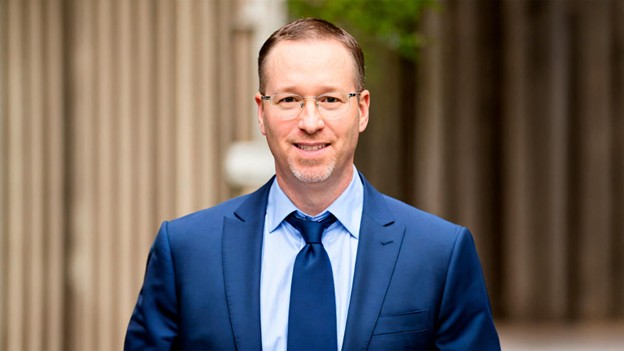
The best claims data analysis for senior living considers the people dynamics: the way a caregiver places a hand on a resident’s shoulder, the tone of a nurse reminding someone about medication, or the quiet sigh of an overworked staff member. For Scott Reese, CEO and Founder of Echo Assurance, these observations are data points as valuable as incident reports, and together they reveal what a community’s insurance future may hold.
Reese has become a leading voice on the economics of risk in senior living. With more than two decades of experience, he has helped operators reduce premiums by up to 40 percent, cut worker’s compensation claims nearly in half, and implement AI-driven facility scoring across tens of thousands of beds.
“Insurance doesn’t lie,” Reese explains. “The claims data tells the real story of what happens when people feel like numbers instead of neighbors.”
The Arithmetic of Growth and Risk
Reese has a name for the pattern he sees repeatedly in senior living facilities: the “grace curve.” It describes the delicate balance between scaling operations and maintaining the empathy that defines quality care, a concept he developed after analyzing decades of claims data and walking through hundreds of communities.
The idea underscores that growth without cultural and emotional alignment often results in higher incident rates, while organizations that expand “with grace” preserve both resident well-being and financial stability.
“I can predict an operator’s claims before they file them,” Reese says. “When growth rises faster than grace, the claims curve explodes right behind it.” Communities expanding too quickly often face rising loss ratios, costly lawsuits, and even non-renewals from carriers. These outcomes, Reese stresses, are not random. They are predictable consequences of cutting corners on training, diluting culture, and losing touch with residents. By contrast, operators who scale thoughtfully—what he calls “gracefully”—tend to have stronger insurance outcomes. “The operators who maintain sub-1.0 loss ratios during growth have figured out how to make every resident feel seen and valued. That’s not about systems. That’s about soul.”
Three Catastrophes That Drive Costs
The biggest mistakes he encounters in senior living operations can be categorized into three recurring catastrophes.
First is what he calls the “invisible resident epidemic.” Residents who feel overlooked become unpredictable, whether through wandering, refusing medication, or engaging in risky behavior. Each oversight translates into potential claims.
Second is the “staff exodus liability loop.” Rapid growth frequently drives turnover, which in turn weakens resident care and sparks more complaints, leading to greater burnout and escalating claims. “Every caregiver you retain prevents ten claims you’ll never have to file,” Reese says.
The third is the “culture dilution death spiral.” Hiring faster than training inevitably fractures community culture, creating inconsistencies in care and higher incident rates. “Fragmentation is uninsurable,” Reese says.
Where AI Changes the Game
Artificial intelligence is fast becoming a powerful complement to risk management in this setting. At Echo Assurance, his team deploys AI-driven risk assessments to score facilities. “We use AI to spot patterns humans might miss,” Reese explains. “But it only works when paired with intentional care. Technology gives us predictive insights, but it’s people who translate those insights into prevention.” The combination of human-centered care and machine-driven analytics, Reese argues, creates a competitive advantage in an industry where premiums can make or break profitability.
The Economics of Grace
The hidden economics of care comes down to a single equation: “For every new bed you add, you must multiply your capacity to make someone feel irreplaceable. If you don’t, you multiply your exposure to claims that could destroy you,” says Reese.
Communities that embrace this principle often see a ripple effect. Families feel heard, reducing lawsuits; staff feel supported, lowering turnover; insurers reward stability with better terms. In these cases, insurance transforms from a burden into an asset. After decades in the field, Reese has learned that the difference between thriving operators and struggling ones comes down to intent. “The question I always ask is: are you growing to serve more families, or are you serving families to justify growth? The claims data never lies about the answer.”
“Someone’s mother is trusting you with her remaining dignity,” he says. “If you honor that trust, you won’t just reduce your insurance risk—you’ll build a forever company whose foundation is care.”
To learn more about Scott Reese, connect with him on LinkedIn or visit his website.