

Bin night in our house tells a food story nobody in the family wants to read.
Half a bag of spinach. A container of something I made on Sunday and nobody finished. Two
chicken breasts that were meant to be dinner three nights ago. None of it was cheap. All of
it went in the bin almost automatically, because by the time I got to it, it had already stopped
being dinner and started being a problem to deal with.
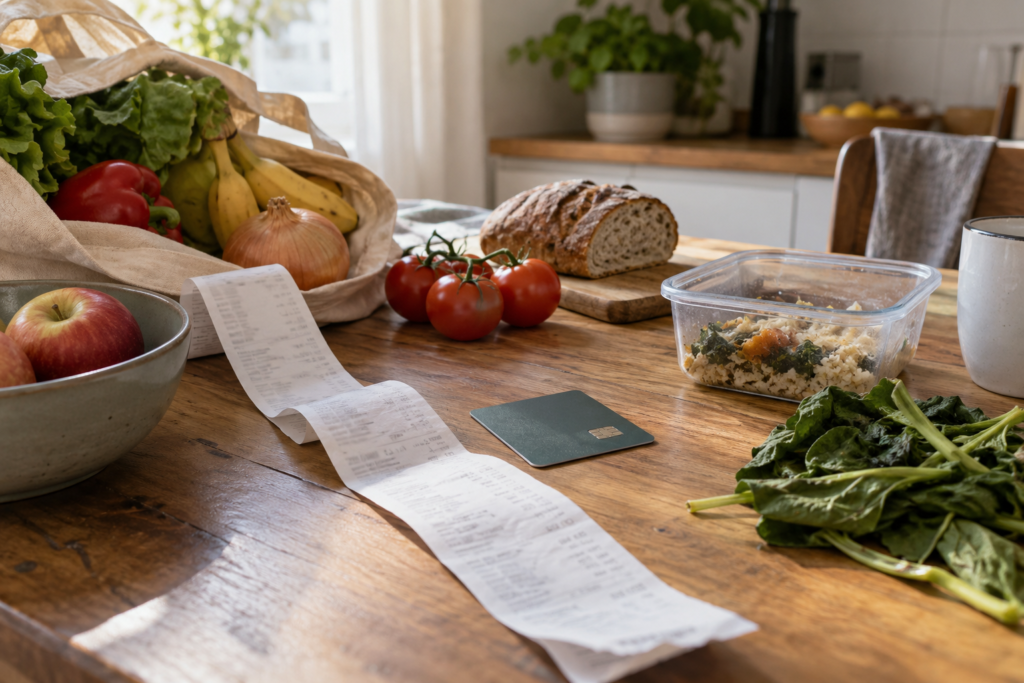
I used to think the expensive part of feeding a family was the shop. The trolley, the total on
the screen, the slight wince when the card goes through. It isn’t. The expensive part
happens quietly, days later, when something you already paid for gets thrown away because
nobody decided what to do with it in time.
Where the Real Bill Comes From
Nobody adds this up, so nobody sees it.
The groceries were paid for once. Then, because they didn’t get used, they’re effectively
paid for again, through a takeaway order or another trip to the shop for something that
could have come from what was already in the fridge. Food doesn’t disappear when it’s
thrown out. The money you’ve already spent disappears with it, and whatever replaces it
costs you again.
Add it up across a year and the number gets uncomfortable fast. Not because anyone made
one bad decision. Because the same small decision, use it or don’t, gets made wrong a few
times a week, every week, without anyone noticing the pattern.
It Was Never About Expensive Groceries
The instinct is always to cut spending at the shop. Buy less. Buy cheaper. Skip the extras.
That misses where the money actually leaks. A cheaper trolley isn’t really cheaper if too
much of it ends up in the bin. The problem isn’t only what you bought. It’s what happened to
it after you got home. Two households can spend exactly the same amount at the checkout
and end the month in completely different positions, because one of them kept using what it
already had and the other kept starting over.
The Cost Nobody Puts on a Receipt

Money is only part of it.
There’s the time spent standing in front of a fridge trying to work out what to do with what’s
left. There’s the extra trip to the shop that wasn’t really necessary. There’s the small, tired
frustration of watching good food go to waste again, which nobody enjoys and everybody
has felt.
And health sits underneath it too. When you’re tired and something in the fridge requires
another decision, the quick option usually wins. Not necessarily because it’s what you
wanted to eat, but because working out what to do with everything else felt like too much
effort.
None of this shows up on a receipt. It shows up in the bin, in the calendar, in how tired
everyone is by Thursday.
We Keep Looking at the Wrong Number
When food prices rise, we understandably focus on the checkout. That’s the number we can
see. But what a household spends on food and what it actually gets from that spending
aren’t necessarily the same thing. If we want to understand the real cost of feeding a
household, we need to look beyond what went into the trolley and start looking at what
actually got used.
What This Actually Costs
The most expensive decision most people make isn’t at the checkout. It’s standing in front
of a fridge full of food and deciding, without quite realising it, not to use it.
That decision doesn’t feel expensive in the moment. It just feels like a long day. But repeat it
a few times a week, across millions of kitchens, and suddenly we’re not talking about
leftovers. We’re talking about one of the biggest hidden costs in the household food system
For more tricks and tips on food waste and cost-saving, visit Snap2cooks website here.