

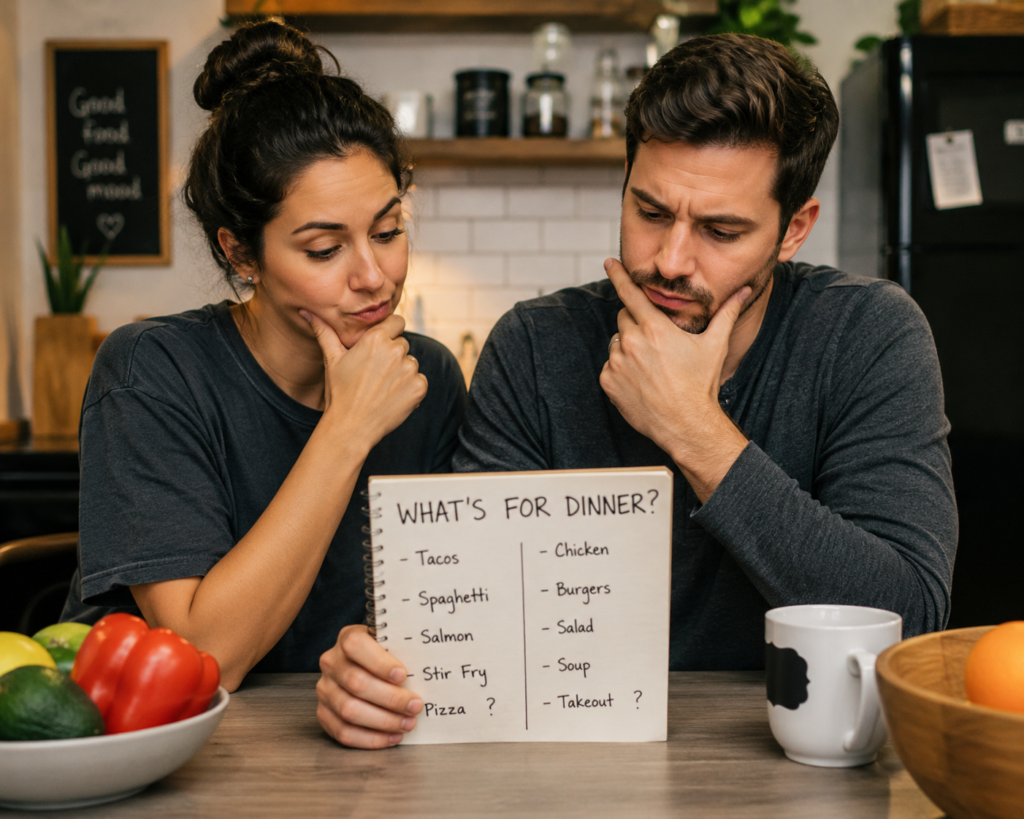
A few weeks ago my wife opened her phone at the kitchen counter to find a recipe. Within
ten seconds, a food delivery ad appeared. Then a supermarket promotion for a meal kit.
Then a video of someone else’s dinner, plated better than anything either of us would
attempt on a Tuesday.
She hadn’t asked for any of it. She’d just opened the phone.
By the time she put it down, the decision had already started moving. Not because she’d
made it. Because something else had started shaping it.
That’s the moment that got me thinking. We talk about the kitchen decision like it belongs to
the household. Like it always has. But increasingly, it doesn’t. And most people haven’t
noticed the handover.
The Assumption Nobody Questions
For as long as anyone can remember, the assumption has been simple. The household
decides what to eat. Everything else, retailers, brands, advertising, is just background noise
competing for attention.
That assumption made sense when the kitchen was quiet. When the only input was what
was in the fridge and what someone felt like cooking. It doesn’t hold up anymore. The
kitchen isn’t quiet anymore. It’s one of the most contested spaces in a person’s day, yet
most people don’t realise just how many voices are competing for that decision.
Who’s Actually in the Room
Ask yourself honestly who shaped what you ate this week.
Was it really you? Or was it the supermarket special you noticed yesterday? The recipe feed
that decided what looked good tonight. The government guideline sitting quietly in the back
of your mind. The influencer whose dinner you scrolled past that morning. Or the food brand
that’s spent decades making sure its product is the first thing you think of when you’re tired
and undecided.
Increasingly, it’s an algorithm. Something built to predict what you’ll want before you’ve
decided you want it. Not because it understands you. Because it’s had a lot of practice
guessing.
None of these forces are new individually. What’s new is how many of them are now active
at once, and how quietly they operate. Nobody announces that they’re shaping your dinner.
They just do.
Why This Isn’t a Small Thing
It’s tempting to treat this as harmless. A supermarket special saves you money. A recipe
feed gives you inspiration. An algorithm just makes life easier.
Sometimes that’s true. But influence isn’t neutral just because it’s convenient. Every one of
these influences has objectives that don’t always align with yours. The supermarket wants
to move inventory. The brand wants to be your first choice. The platform wants attention.
None of them are optimising for what’s already in your fridge, what your family will actually
eat, or what you were trying to avoid wasting this week.
The household used to be the only party in the room. Now it’s one voice among many, and
often not the loudest one.
What Reclaiming It Actually Looks Like
This is the problem I set out to solve when I built Snap2Cook. Not to add another voice to
the room. There are enough of those already. The idea was actually very simple. Start with
what’s already in someone’s kitchen, on their terms, and help them make a better decision
instead of shaping it for someone else’s benefit.
That distinction matters more than it sounds. A recipe feed wants your attention. A
supermarket special wants your basket. An algorithm wants your habit. A tool built to work
from what you already have, for no reason other than helping you use it, isn’t competing for
the decision. It’s returning it. That’s a different kind of influence. It doesn’t ask what you
should want. It starts with what you’ve already got and helps you make it work.
I built Snap2Cook because I wanted technology to start with the household, not the retailer,
the recipe, or the promotion. I kept watching the same thing happen, in my own kitchen and
everyone else’s. The decision kept getting made for people, quietly, by parties with their
own agenda. So I built something that worked for the household instead of around it.
The Question That Actually Matters
The question isn’t whether the kitchen decision is being shaped. It clearly is, every day, by
forces most people never see. The question is who’s doing the shaping, and whether it’s
happening in your interest or someone else’s.
For decades, we’ve assumed households own the kitchen decision. Increasingly, they don’t.
Every recommendation, promotion, recipe feed, supermarket special, and AI assistant is
quietly competing for that moment.
The kitchen used to be the one place in the food system that belonged entirely to the
person standing in it. Today it’s one of the most contested spaces in food. The question
isn’t whether it’s being influenced. It’s whether we’ve noticed who’s doing the influencing.